
 +971 50
7774039
+971 50
7774039
 +971 2 550 4002
 sales@globalalarms.ae
Ventilation Strategies for Smoke Control in Abu Dhabi Structures
In a rapidly developing city like Abu Dhabi, where high-rise buildings, commercial complexes, and industrial facilities are continuously expanding, fire safety is not just a regulatory requirement—it is a critical design priority. Among the various fire protection measures, smoke control through effective ventilation strategies plays a vital role in protecting lives, minimizing property damage, and ensuring safe evacuation during emergencies.
Smoke, more than flames, is responsible for the majority of fire-related casualties. It reduces visibility, carries toxic gases, and spreads quickly through poorly ventilated spaces. This makes it essential for buildings in Abu Dhabi to adopt advanced and well-planned ventilation systems tailored to local regulations and environmental conditions.
Understanding Smoke Behavior in Buildings
Before exploring ventilation strategies, it is important to understand how smoke behaves during a fire incident. Smoke tends to rise due to heat (buoyancy effect), but it can also spread horizontally through corridors, ducts, and open spaces. In enclosed or poorly ventilated buildings, smoke accumulation can become life-threatening within minutes.
In Abu Dhabi’s climate, where buildings are often tightly sealed to maintain air conditioning efficiency, smoke can spread even faster if proper exhaust systems are not in place. This makes engineered smoke ventilation systems essential rather than optional.
Importance of Smoke Control Ventilation
Smoke control ventilation systems are designed to:
- Maintain clear escape routes for occupants
- Assist firefighters in accessing affected areas
- Prevent smoke from spreading to unaffected zones
- Reduce structural damage caused by heat and soot
In Abu Dhabi, compliance with UAE Fire and Life Safety Code mandates the integration of smoke management systems in various building types, including residential towers, malls, hospitals, and industrial units.
Key Ventilation Strategies for Smoke Control
1. Mechanical Smoke Extraction Systems
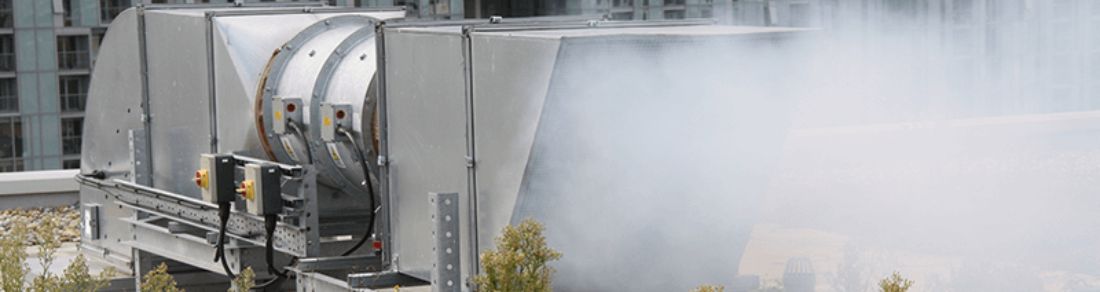
Mechanical ventilation is one of the most widely used strategies in modern buildings. These systems use powered fans to extract smoke from affected areas and expel it outside.
In high-rise structures across Abu Dhabi, smoke exhaust fans are strategically installed in basements, corridors, and parking areas. These fans are activated automatically through fire alarm systems and help maintain breathable air levels during evacuation.
Mechanical systems are particularly effective in:
- Underground parking areas
- Large commercial buildings
- Enclosed industrial spaces
Their reliability and ability to function irrespective of external weather conditions make them a preferred choice.
2. Natural Ventilation Systems
Natural ventilation relies on passive airflow through openings such as windows, vents, and smoke shafts. When designed correctly, it allows smoke to escape without mechanical assistance.
In Abu Dhabi, natural ventilation is often integrated into atriums, staircases, and large open spaces. However, due to the region’s hot climate and sealed building designs, natural systems are usually combined with mechanical solutions for enhanced efficiency.
This strategy is cost-effective and energy-efficient but requires careful architectural planning.
3. Pressurization Systems
Pressurization is a critical smoke control technique used to protect escape routes such as staircases, lift shafts, and corridors.
In this system, fresh air is pumped into these spaces to create higher pressure compared to surrounding areas. This prevents smoke from entering and ensures safe evacuation paths.
In Abu Dhabi’s high-rise buildings, staircase pressurization systems are mandatory and highly effective in maintaining visibility and breathable air during emergencies.
4. Smoke Curtains and Barriers
Smoke curtains and barriers are used to control the movement of smoke within large spaces. These systems help compartmentalize areas, preventing smoke from spreading rapidly.
They are commonly used in:
- Shopping malls
- Airports
- Exhibition centers
In Abu Dhabi’s large commercial developments, smoke curtains work alongside ventilation systems to channel smoke toward exhaust points, improving overall system efficiency.
5. Car Park Ventilation Systems
Basement and underground parking areas pose unique challenges due to limited natural airflow. Smoke accumulation in such spaces can be extremely hazardous.
Jet fan systems and ducted ventilation are commonly used in Abu Dhabi to manage smoke in car parks. These systems:
- Direct smoke toward extraction points
- Improve visibility for evacuation
- Assist firefighters in navigating the area
Given the widespread use of underground parking in the city, this strategy is essential for compliance and safety.
Integration with Fire Alarm and Detection Systems
Ventilation strategies for smoke control are most effective when integrated with advanced fire detection systems. Once smoke or fire is detected, the system automatically activates:
- Exhaust fans
- Pressurization units
- Smoke dampers
This automation ensures a rapid response, reducing the time taken to control smoke spread. In Abu Dhabi, smart building technologies are increasingly being adopted to enhance this integration.
Design Considerations for Abu Dhabi Structures
Designing smoke control ventilation systems in Abu Dhabi requires careful consideration of several factors:
Climate Conditions
The extreme heat and reliance on air conditioning influence building design. Ventilation systems must function efficiently without compromising indoor cooling.
Building Type and Usage
Different structures—residential, commercial, or industrial—require tailored solutions based on occupancy and risk levels.
Compliance with Regulations
Strict adherence to UAE Fire and Life Safety Code is mandatory. Systems must be tested, certified, and regularly maintained.
Energy Efficiency
Modern buildings aim to balance safety with sustainability. Energy-efficient ventilation systems are becoming increasingly important.
Maintenance and Testing
Even the most advanced ventilation systems can fail without proper maintenance. Regular inspection, testing, and servicing are essential to ensure optimal performance.
In Abu Dhabi, building owners are required to conduct periodic maintenance checks, including:
- Fan performance testing
- Damper functionality
- System integration checks
Proper maintenance not only ensures compliance but also guarantees reliability during emergencies.
Future Trends in Smoke Control Ventilation
With advancements in technology, smoke control systems are becoming smarter and more efficient. Some emerging trends include:
- AI-based fire detection and response systems
- Smart sensors for real-time air quality monitoring
- Energy-efficient ventilation designs
- Integration with building management systems (BMS)
Abu Dhabi’s focus on smart city development is expected to further drive innovation in this field.
Conclusion
Effective ventilation strategies for smoke control are a cornerstone of modern fire safety systems in Abu Dhabi structures. From mechanical extraction and pressurization to smart integration with fire alarms, these systems are designed to save lives and protect property.
As buildings continue to grow taller and more complex, the importance of well-designed and properly maintained smoke ventilation systems cannot be overstated. By adopting advanced technologies and adhering to safety regulations, property owners and developers can ensure safer environments for occupants.
For businesses and property developers looking to implement reliable fire safety solutions, partnering with experienced providers like Global Alarms ensures compliance, quality, and peace of mind in safeguarding lives and assets.
